This is a very important topic and something I knew very little about before I got pregnant! SIDS is every parent’s worst nightmare and safe sleep practices are extremely important in reducing SIDS. I understand that things are not always black and white and sometimes it is difficult to do things exactly as recommended, but I really hope that this post will be a good resource by gathering information from reliable sources, so that you can make an informed decision in creating a safe sleep environment for your baby. As always, seek the advice of your doctor and also do your own research to make the best decision for your family.
The guidelines for safe sleep
There are a number of reliable and evidence-backed resources out there regarding safe sleep, but there also a lot of confusing products out there that aren’t as safe as they claim to be. Here is a page on the updated safe sleep for infant recommendations from the American Academy of Pediatricians and an article from the CDC.
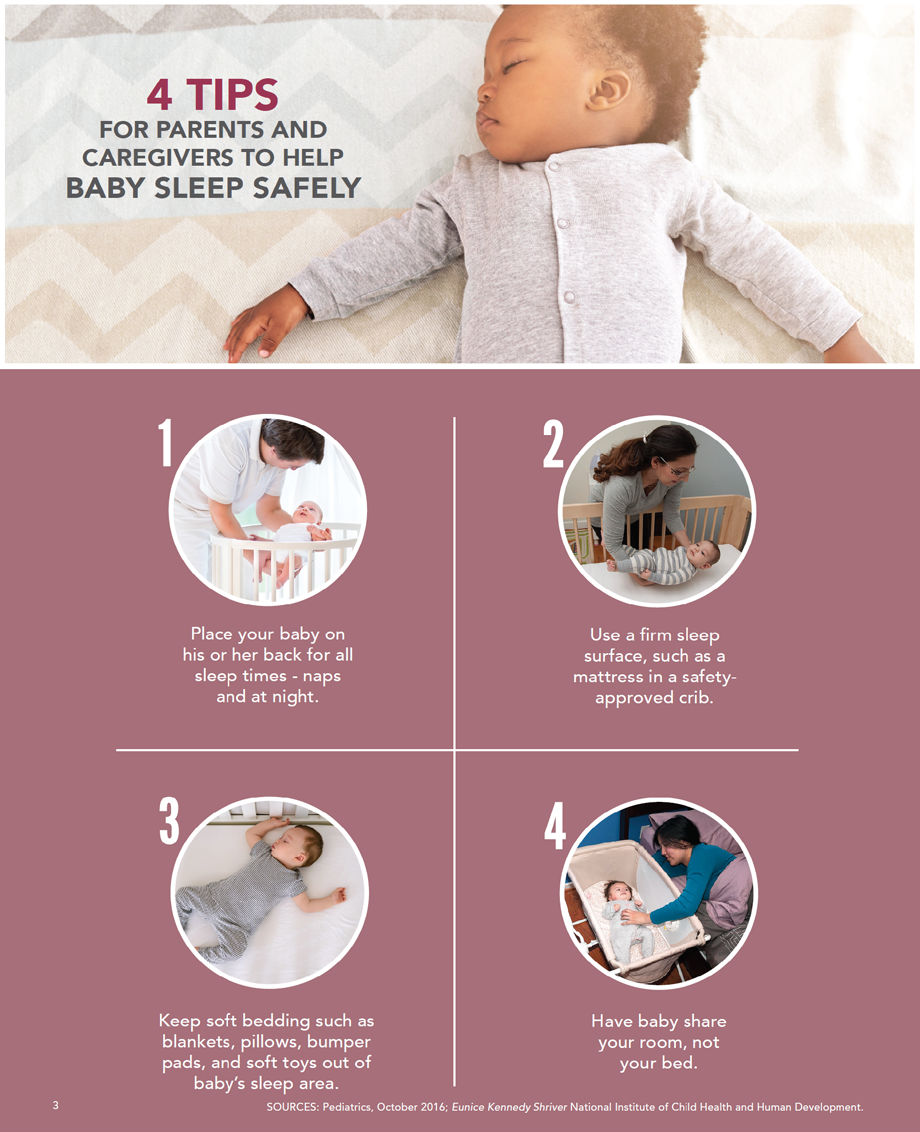
Infographic from the CDC
The recommended guidelines for safe sleep are:
- Babies should always be placed on their back on a firm mattress with a tightly fitted sheet.
- Avoid the use of soft bedding and keep items such as stuffed toys, bumpers, pillows, and blankets out of the crib. Essentially: KEEP THE CRIB BARE.
- Share a bedroom with parents (the safest is the same room, but not the same sleep surface) for at least 6 months.
- Do not use commercial monitors and products such as sleep positioners or monitors marketed to reduce SIDS (sudden infant death syndrome).
Similar guidelines are published by the Hong Kong Department of Health, the NHS (UK), the European Foundation for the Care of Newborn Infants and the European Committee of Standardization.
The last point above is particularly important, because there are a lot of products out there that are marketed to trick parents into thinking it will reduce SIDS. I have touched on this briefly before regarding sleep positioners. These products claim to keep your baby in a safe and comfortable position, but actually increase the risk of suffocation. The FDA has issued a warning regarding sleep positioners and baby nests. The safe sleep guidelines from the NHS posted earlier also specifically warn against the use of baby nests. Baby monitors that keep track of the baby’s vitals (while many do not outrightly claim to reduce SIDS) may also give parents a false sense of security.
Nests and pods have been extremely popular and I see them everywhere. They claim to make your baby sleep better by creating a secure and protective feeling. One of them is the Dock A Tot and it may seem like a great place for your infant to sleep, but it should only be used when supervised and it is an unsafe sleeping device. The company itself has issued guidelines stating that the Dock a Tot is NOT a to be used as a sleeping device, yet many parents still use it in an unsafe manner. Another popular sleep pod is the Sleepyhead. The website itself claims that it is safe for use as a sleeping device and can be placed in cribs due to the product adhering to British Standards for breathability. However, since doing so still goes against the safe sleep recommendation of letting a baby sleep on a firm and bare mattress, I would still be cautious when using it as a sleeping device (overnight). This of course does not mean it is a bad product. I actually used a Sleepyhead and it was absolutely perfect for supervised naps and lounging! I also know that many babies sleep much better in the pods as compared to a large crib, so I can understand why parents may want to use them as they don’t know they are unsafe sleep devices.
The Lullaby Trust (backed by Public Health England) has also issued a safety warning against baby sleep nests or pods. The Department of Health of Canada has also issued a safety warning for baby nests and pods. Give this article a read if you want to learn more about sleep positioners and nests/pods. The Lullaby Trust is an UK organization made up of pediatricians and academics with expertise in infant sleep and SIDS.
Ultimately, I think the take home message is to keep the crib as bare as possible. It may look very plain and you’re tempted to add some pillows or toys, fluffy blankets, or products that claims to be beneficial, but don’t do it!
There are a lot of different products out there and it can get confusing for new parents, but it is so important for us to do our homework and look up whether they are actually safe or not. Many products may also claim that their products are safe, but actually lack evidence or official safety certifications to back up that claim.
I do want to add that these are also general guidelines and as much as we should try to follow them, do discuss with your doctor (who is up to date with your child’s individual development and health) to discuss options. Here are some exceptions that I discussed with my healthcare provider:
-
- Blankets: I had read that blankets were considered unsafe until 12 months, but I noticed that blankets were used in the hospital where I gave birth. I checked with the midwives and two different pediatricians and they said that light blankets were fine to use as long as they are tucked in at the end of the bed and the infant’s feet are at the bottom end of the bed.
- Stuffed toy or lovey in bed with baby: The guidelines say that the crib should be bare but at 4 months our pediatrician recommended that we place a lovey or toy in bed with Lex so that he would feel more secure when he wakes up. He is quite a robust baby and we all felt comfortable that he would be able to push it aside if it was bothering him.
- Co-sleeping: Room sharing (but with the baby sleeping on a different sleep surface) is what is recommended and I personally had always felt a bit uneasy having a tiny baby in the bed with us. However, upon further research and my own real life experience, I have a new perspective about co-sleeping. I also spoke to my doctor about this and will share more in a separate post!
Our sleeping set up for Lex
In accordance with the guideline of having the baby share our room (and since we will not be hiring a confinement nanny or a full time helper), Lex will sleep in our room in a bassinet for the first 6 months. His bassinet is next to my bedside, so it will be easier for me to check on him and also for night feedings. The bassinet that we chose is the Tutto Bambini Cozee (for purchase in HK). I like it because it has a flat firm mattress and also mesh sides for ventilation. The Chicco Next2Me series was also considered and has similar qualities, but I ultimately went for the Tutto Bambini because the Chicco one felt a little flimsy.
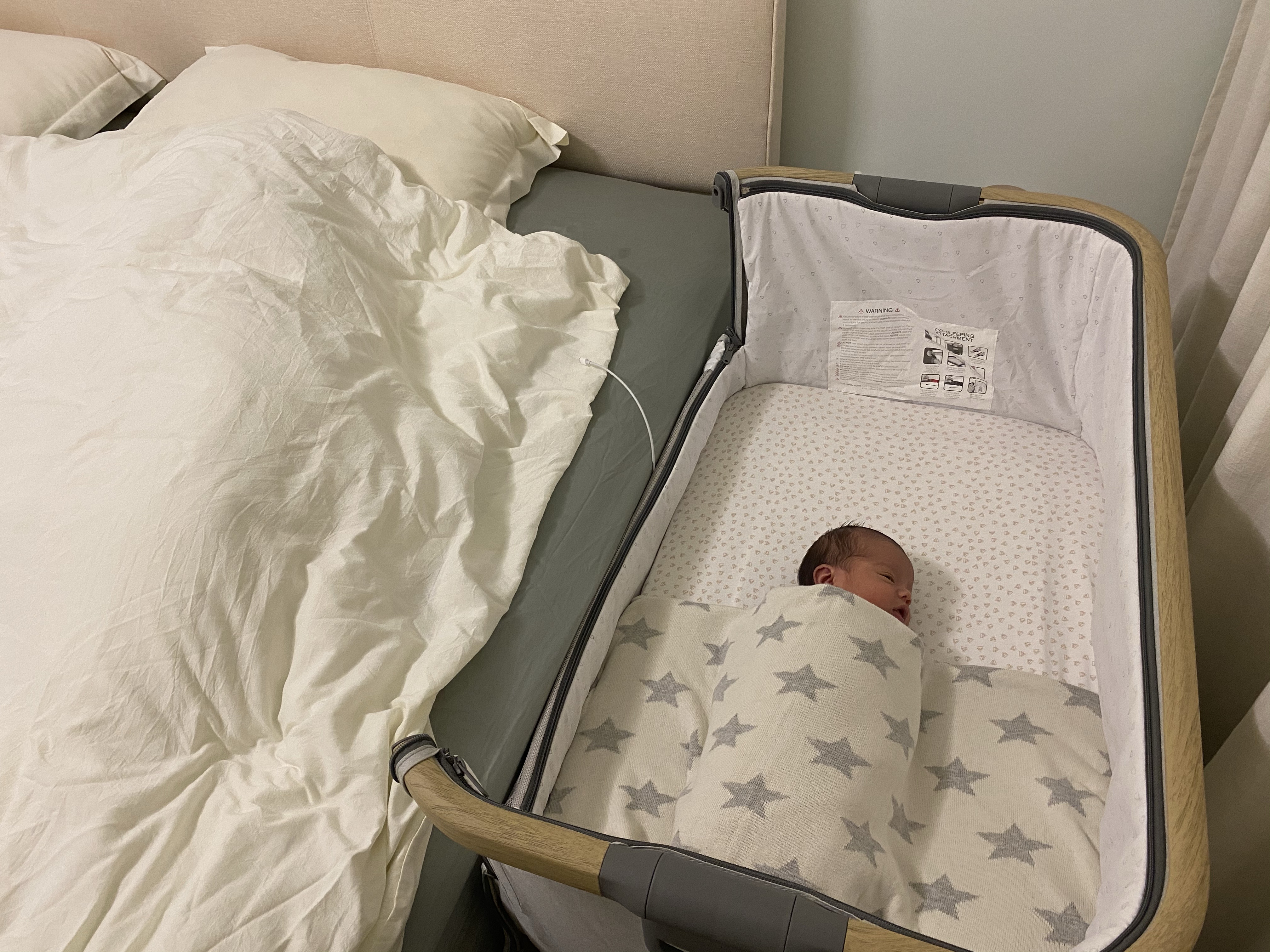
The plan is that we we will move him to his own nursery at 6 months where we have a Baby Letto crib (for purchase in HK). We actually did not pay attention to the quality of wood and painting technique when we first looked into cribs and only realized that it was actually something that was important later on. We had already picked the Baby Letto crib and realized after purchasing it that it is GREENGUARD certified, which means that it is screened for over 10,000 chemicals and VOCs. The crib is also made using a non-toxic painting technique (great since Lex loves to slobber and gnaw on everything) and the crib is made with one of the most sustainable types of woods on earth (an extra plus!). We also purchased a Baby Letto non-toxic mattress with a waterproof cover for the crib. We wanted to get the same branded mattress to ensure that it fits (although most standard crib measurements should work). It also seemed like a brand that can be trusted.
We use 100% cotton/organic cotton sheets or bamboo sheets for the bedding and we got sheets that fit the mattress perfectly to ensure a tight fit. The crib will be bare and will not have any pillows, sleep positioners, bumpers, or large stuffed toys. We swaddled Lex until he was able to roll over. We also used a light blanket tucked into the bassinet but switched to sleep sacks around 4 months and removed the blanket. We have the room at 20-22 Celsius (this is an article on the best temperature for infant sleep…. I don’t think I can handle 16 Celsius!). I also periodically check his neck to make sure he is not too hot or cold.
For napping, we used a SleepyHead with Lex that was kindly lent to us by a friend. It is true that it is much more snug and he sleeps better in it as compared to the large crib during his naps, so I can understand the appeal of using this product, but I do not use it for overnight sleeping.
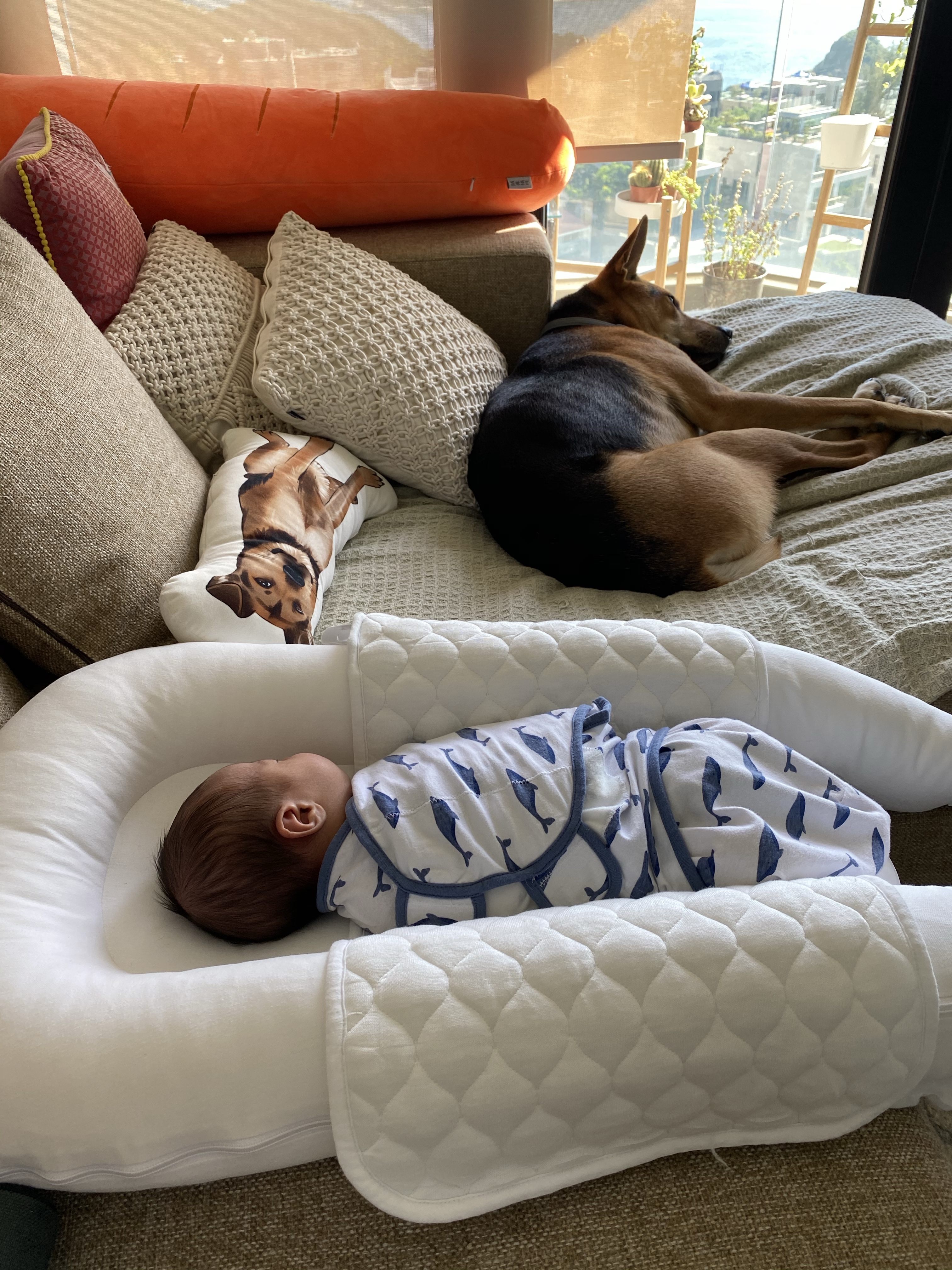
If you read everything… thank you!! If you didn’t, I still hope that this was useful in helping you make more informed decisions about how to create a safe sleeping environment for your infant. Apart from just doing the research, also check periodically to make sure you are updated with the latest guidelines and product recalls. Sleep with a baby is not always easy, but I am sure that with time and effort we will all find the solution that works best for our family!
 Stephanie Lau