Cooking for my loved ones is one of my favorite things to do, so I was super excited to introduce solids to Lex. Solids can be introduced to babies from 4 months but most start around 6 months. As always this is an account of my own personal experience and should never be taken as professional medical or nutritional advice. Do your own research to figure out what is best for your family.
If you feel like your baby is ready for solids, here are a few of the readiness signs to look out for:
- Sitting up (some resources say unsupported, some say with some support such as towels. We did not do baby led weaning until he was sitting up fully unsupported but we did offer him some puree when he could sit up supported)
- Can hold up head/neck strength
- Loss of tongue thrust instinct
- Fascination with food/meal time
Lex was able to sit up supported with some towels around 5 months and also showed A LOT of interest in our food. We spoke to our pediatrician and she said that we can start him out on some rice cereal while he sits in his baby bouncer. I did a little bit of research and felt that rice cereal was not actually that nutritious, so we decided to try some mashed up banana as his first food. We spoon fed him a little bit of the puree but quickly found out that he still had his tongue thrust reflex where he was pushing everything out with his tongue. We decided to wait a little bit and try again later.
At 5.5 months, we decided to give it a go again! He no longer had this tongue thrust reflex so we decided to start off with some single ingredient purees. We did not feel comfortable starting BLW (baby led weaning) yet because he was still unable to sit unsupported. It is important that he can do that for BLW so that he does not choke. We wanted to start off with single ingredient foods so that we can make sure he was not allergic to anything. We do not have any family history of food allergies but if you do, you should speak to your doctor before introducing top allergens such as nuts or dairy. Don’t introduce a bunch of new things at once or else it will be difficult for you to isolate which ingredient is the issue. When we introduced peanut butter (OUR FAVORITE) for the first time, we thinned it out into yogurt or oatmeal cereal and watched him carefully. If nothing happened for a few minutes, we gave him more. It is beneficial to introduce top allergens before 12 months and to do it consistently! Apart from peanut butter, I also purchased a 7 nut mix that I add to Lex’s breakfast consistently. He also had no issues with dairy or seafood, etc. Lex was not that keen on being spoon fed and would always grab the spoon and feed himself. It was a mess but it was so cute watching him discover new flavors and his dexterity in holding the spoon.
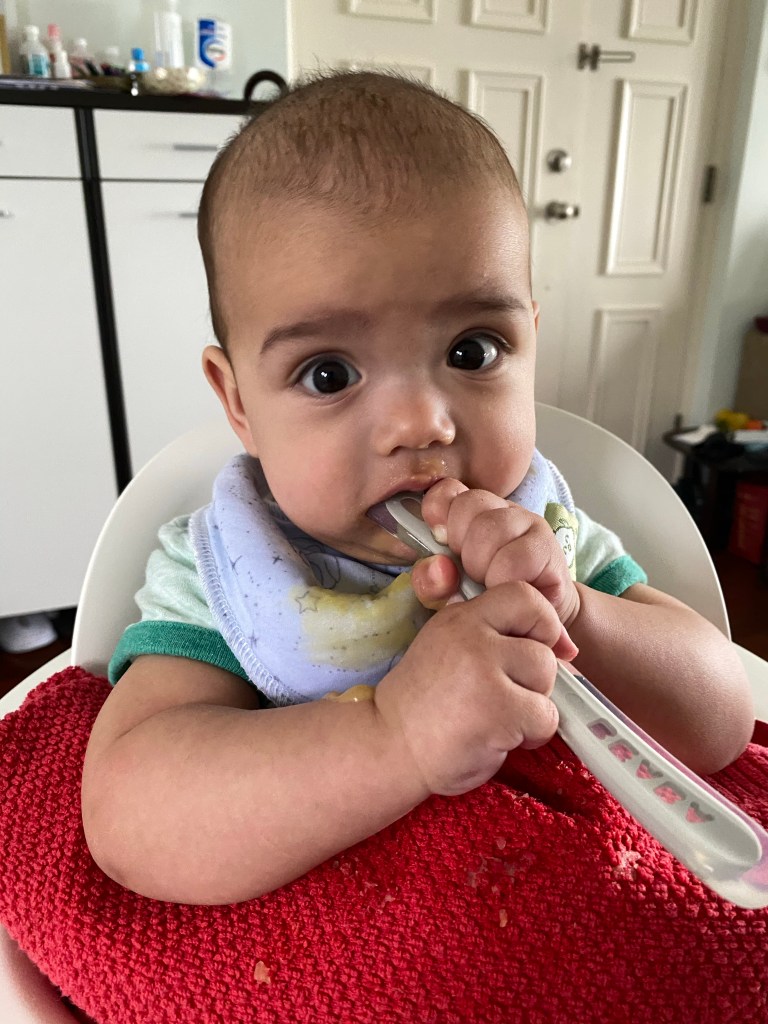
At 6 months, Lex could sit up properly without support so it was time to BLW! Baby led weaning is a method of feeding where you mostly skip spoon fed purees and offer your baby finger foods that they can grab and feed themselves. Some strict BLW followers say you need to skip purees all together but others argue that purees can also be offered on a preloaded spoon for babies to feed themselves with. Baby led weaning boasts a lot of benefits, including allowing the baby to self regulate their feeding, improving hand eye coordination, better relationship with food/more adventurous palate, and convenience for parents also! I purchased two books that I found very helpful. One is Baby Led Feeding by Jenna Helwig and the other is Simple and Safe Baby Led Weaning by Malina Malkani. Baby Led Feeding provides LOTS of amazing recipes while Simple and Safe Baby Led weaning gives you great basic information like how to serve single ingredient items safely. Both were helpful in different ways. As I started to move on from single ingredient items, I used the Baby Led Feeding book much more. The instagram account of “Infant Nutritionist” also played a vital role in my research for BLW. I would urge all parents who plan to BLW to read up on it and check out all the different resources out there.
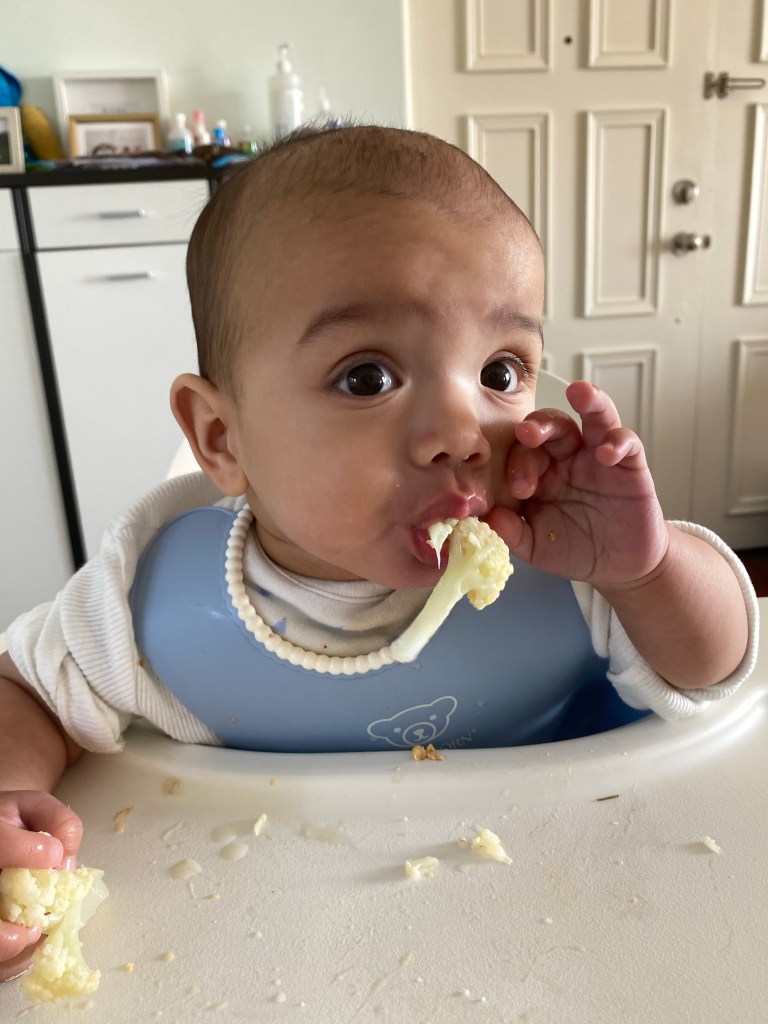
However, like all things, this might not be the right choice for every family so do your research and see what works for you. I loved the idea of BLW but also felt that Lex wasn’t actually ingesting a lot of the food. He loved exploring the foods but not a lot was actually swallowed. I loved that it allowed him to explore at his own pace and the intake of food is not the only reason we eat, but it was also important for me for him to get his needed nutrition and caloric intake. Therefore we decided to go for a mixed approach. Breakfast would be mostly BLW with some spoon fed items and lunch was spoon fed puree. I realized that what was most important to me was responsive feeding – which is also in line with how I breastfed Lex! I wanted to respect him and look to him for his hunger cues, and not feed him according to what made sense to me. With responsive feeding, you don’t try to coax or force your baby to have “just one more bite”, if they are full and turn away from the food or are disinterested, we clean them up and end the meal session!
Of course, starting solids, especially with BLW, can get MESSY! It is quite cute to see food all over Lex’s face but it can also be quite a lot of work during the clean up. It definitely does help to have a dog when you are starting solids with a baby. Mister is always hovering around like a shark when Lex is eating and vacuuming up any bits that fall to the ground. I also HATE wasting food and I feel much better knowing that Mister can gobble up the leftovers (obviously making sure that he can eat the ingredients.
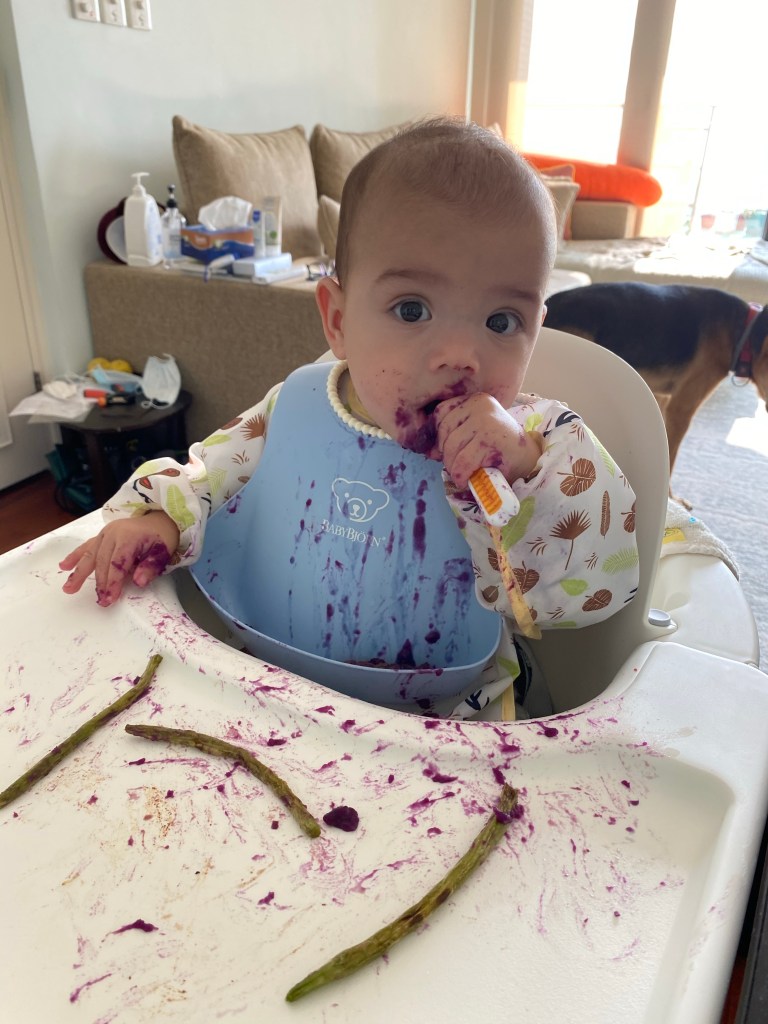
I was really happy with our mixed approach because Lex was able to practice BLW and also get his adequate nutritional intake. He was ravenous for the purees and we definitely saw him plumb up a bit after starting the mixed feeding approach. It is also important to note that you should have a neutral or positive attitude when introducing solids, don’t be upset if your baby rejects certain foods. Some meals are a huge hit while others are not! If your baby does not like a certain food, don’t try to force it and introduce it another time.
We try to keep his diet quite varied but one thing you need to pay attention to is iron. In the books and resources I read, it is said that babies have an iron reserve when they are born but that will run out around 6 months. While breastmilk is the perfect nutrition, it does not contain iron so babies will need to get it from iron rich foods such as red meat.
One important to look out for is to understand the difference between gagging and choking. Gagging is a normal protective reflex for babies and while it is scary, try to remain calm when it happens. This is a helpful page on noticing the difference and what to do! I would also recommend taking a pediatric first aid course to make sure you know what to do in emergencies. Jerry and I took one and we feel more secure after doing so. Another thing to read up on are certain foods that babies should NOT have. The #1 thing is honey because of the risk of botulism but apart from that babies can have most things, but do make sure you know about choking hazards such as grapes, hard apple bits, and sticky foods (that’s why it’s important to thin out nut butters). The things I listed are not exhaustive so make sure you do your due diligence.

In the beginning, we started out with 1 meal at day (breakfast) and we added lunch around 7 months. By 8 months Lex was having 3 meals a day! Even for someone who loves to cook, moving from 2 meals to 3 meals did require some planning. I decided to have dinner be BLW style also and Lex can eat our food with some adjustments. We also offer him water with an open cup after each meal because sippy cups are actually not the best for feeding development.
Essentially, this is the breakdown of Lex’s meals.
- Breakfast is usually a combination of: BLW fruit (favorites include strawberries, golden kiwi, papaya, blackberries, oranges) + spoon fed or BLW oatmeal cereal/toast with pb/nut butter/avo + yogurt (mixed with chia and flax seeds, sometimes mashed fruit) and sometimes eggs(plain scrambled, with cheese, omelette). We also do banana pancakes and Taiwanese egg rolls!
- Lunch: purees (usually a meat with a bunch of veggies and a grain (there has been a recent concern about arsenic in rice so I try to do a variety including rice, oatmeal quinoa, millet, polenta, amaranth, etc.) Around 9 months Lex started preferring a chunkier puree and by 11 months he was mostly off purees and ate modified “adult” meals.
- Dinner: BLW of adjusted food that we eat (unsalted meats and veggies) and usually an extra carb for Lex as we usually eat less carbs for our dinner.
Around 8 months, I also started to bake him baby friendly muffins as a snacks. These are usually sweetened with fruits such as banana and dates and don’t contain salt. I also try to add extra fruit and veggies in there! These recipes will be posted on the website!
Around 10 months, I noticed that Lex got dramatically pickier! I read that it is common around this age because they want to exert control. We initially tried to mix things he liked (like yogurt) into meals but I stopped doing that because it was not a good habit to form. I reminded myself that I needed to be neutral and to just keep offering different foods. It definitely can be difficult when he rejects everything sometimes but I just had to stay on course and keep offering a variety of foods. He can definitely be a bit of a diva and turning away dramatically from the food, spitting things out, and even hitting away my hand! Sometimes if he ignored a food item, I will try to save it for the next day and make another dish out of it. Baby’s preferences and mood change all the time so I continued to offer him different things and just got used to the volatility. Sometimes he would scream at the food and sometimes he would gobble it up! It’s all a learning process (for him and me!).

When we eat out, I give Lex some of the items that Jerry and I are eating and sometimes order a little extra something for him. For example, when we ate out at a Thai restaurant, I ordered him some Hainan chicken rice. He loved the rice and I also broke off some small pieces of chicken for him. Other things I’ve given him while eating out were unseasoned fried rice from the kid’s menu and toast strips and chili. Lex also tried some spicy fried rice and loved it! If we are going to a place that does not seem like it will have baby friendly food, we will bring organic baby food pouches (we love the Ella’s kitchen brand). I try to bring things that don’t have too much sugar (more veggie blends over fruits) and also make sure it does not contain any preservatives. I love having Lex join us for meals and it does not need to be a stressful thing at all!
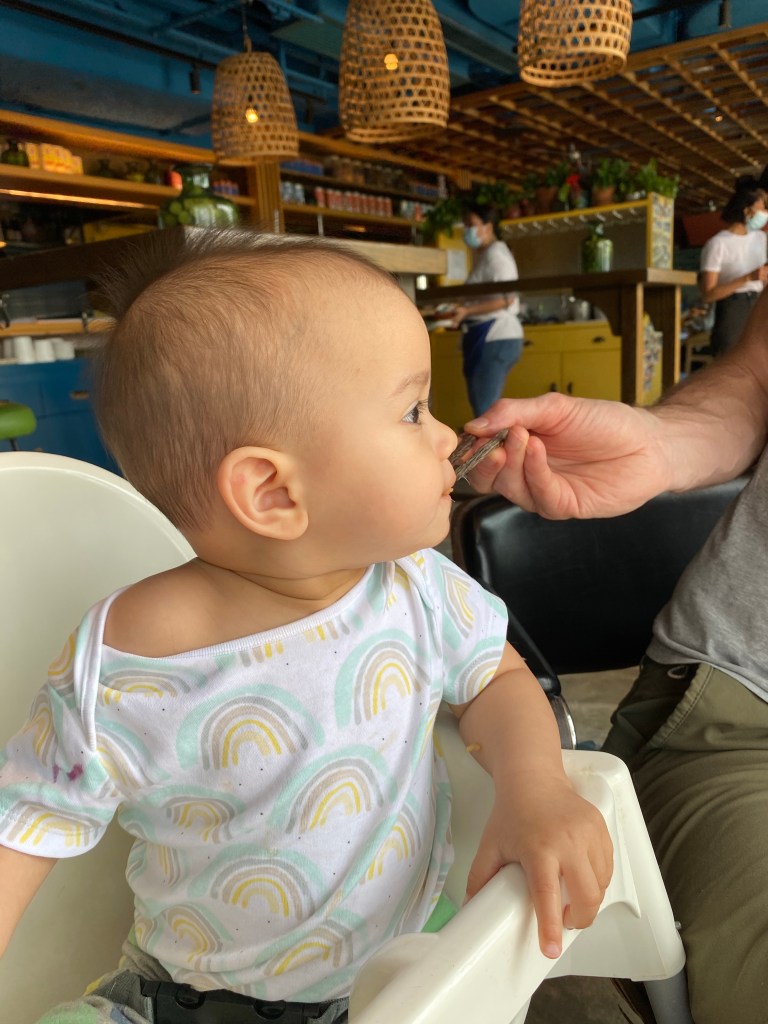
There are mix opinions about whether you should nurse before or after meals. My pediatrician said after while many sources online says before! I don’t really have a rule about it, if Lex is hungry before the meal I will nurse him but if he isn’t trying to nurse I will offer him the solid food meal first. It doesn’t seem to affect his intake of food so I feel ok continuing. You can chat with your pediatrician and also see whether your baby’s behavior is different whether you offer milk before or after meals. However, a baby’s reaction to different foods can be so random so it could be difficult to pinpoint!
In terms of organic vs not organic… we do make an effort to buy organic ingredients for him but its not all or nothing. Organic products are more limited and it would be too stressful and restrictive to do ALL organic. I make a lot of effort to buy high quality and sustainable/wild catch meats and seafood for us as a family so that works out well for Lex’s food also. I also found a great online grocer who has small 100 grams of packaged proteins specifically for babies. This is particularly useful for when I am making purees for him, however, you can easily just cut off some of the meats you use for your own dinner.
Babies are not supposed to have much salt at all and refined sugars are also not great for them. We try to minimize giving Lex those things but we are also not super intense attitude about it. When I am cooking at home, I hardly ever add salt or sugar into his food, I also shy away from pre-made sauces. I noticed that we as a family ate less salted food ever since I started cooking for Lex. However, similar to our own diet, we try to have a balanced approach with feeding him and we let him have “unhealthy” things like fries and ice cream once in a while! Eating nutritious food is important, but food should also be an enjoyment!
Here is a list of products that I use for starting solids
- Stokke Steps high chair (the chair is beautiful and provides good support but I think the tray table is a bit silly because you can’t wash it under water and there are some difficult to clean crevices)
- Beaba spoons
- Num Num preloaded spoons
- Wee Sprout glass jars
- Waterproof bibs
You can also check out many of Lex’s meals in my Instagram under the highlight “Lex’s food”!
Introducing solids has been such a joy! Enjoying delicious food and eating together are important things to our family and I am so happy to see that Lex is such a great little eater (sometimes!). He has tried so many different things and I look forward to many happy family meals together.




 Stephanie Lau