Our diapering journey

Family, Motherhood, Sustainability

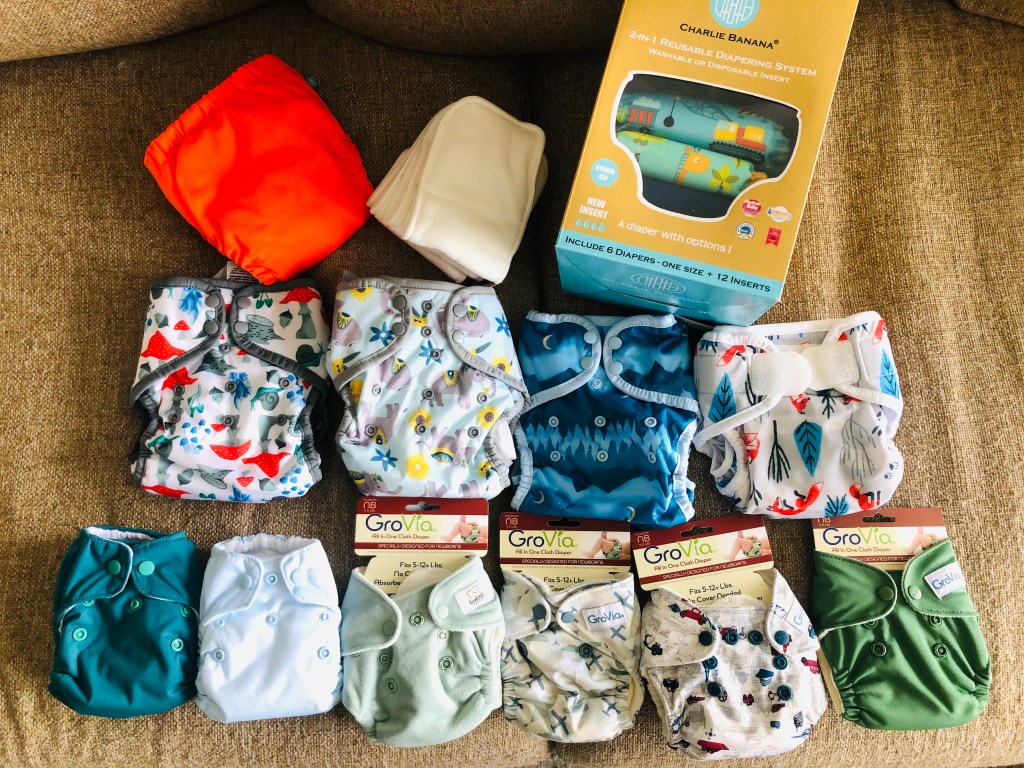
Changing diapers is not everyone’s favorite part of parenthood, but it is something that has to be done. If you follow me on Instagram, you may have seen my stories about my excitement to use cloth diapers. I first heard about cloth diapers on social media and was instantly interested. I found out that babies use around 2,500-3,000 diapers in their first year and it is estimated that diapers take around 500 years to decompose! That is a lot of poopy diapers in the landfill! I was pretty disturbed by this statistic, so I was eager to look into reusable cloth diapers. I was overeager and bought a lot of different sizes and brands to try, including Grovia, Thirties, and Charlie Banana.
Fast forward to when we finally had Lex in our arms. We learnt how to change nappies at the hospital and got used to using the Huggies brand. We decided to buy a few packs to use at home since we were familiar with them. The first few weeks were chaotic and super busy so we wanted to use things that we were comfortable with. We decided to start cloth diapering once we felt a bit more secure and confident with newborn care. Once we had more of a routine and were quite the experts with disposable diapers, I was super excited to finally give the cloth diapering a go! 

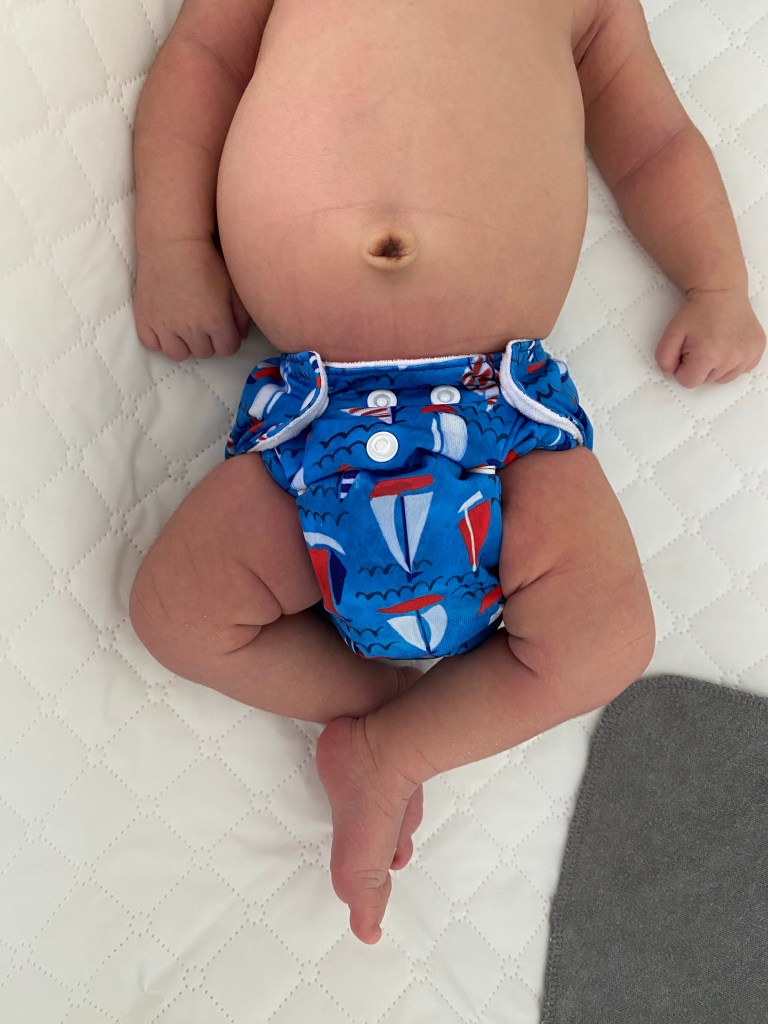
Unfortunately, cloth diapering did not go as smoothly as I had hoped! Essentially, we were experiencing a lot of leaks. I had heard that cloth diapering was harder for newborns since they are so small and funny shaped, but I had bought the newborn sizes and was hoping it would fit ok. Lex has a tiny waist and chunky thighs, a difficult combination when it comes to fit. If the waistband was tight enough, the leg gussets were much too tight. If the leg gussets fit well, the waist was too loose. We kept experiencing leaks from either the waist or the leg. Once it leaked, it meant we had to wash the swaddle and the waterproof pad underneath… as if we did not already have a lot to wash!
I was quite bummed by this and reached out to the cloth diaper shop staff. They were incredibly helpful and sent me lots of tips and fitting videos. However, even after consulting the experts and going over the videos, the leaks were still happening. Jerry is the one in charge of diapering and laundry and it was difficult for me to keep forcing him to try cloth diapers when they weren’t working well. 

We decided to retire the newborn cloth diapers for a bit and to try it again when Lex would be a bit bigger. However, upon further investigation it seems like there is a big debate (another article here) on whether cloth diapering is actually better for the environment as compared to disposables. I was surprised and was pretty annoyed at myself for not doing my due diligence earlier. Our whole reason for using cloth diapers was to be eco-friendly and now I found out that they are just as bad – if not more than using disposables. This not always the case if you are able to launder them efficiently, but with Hong Kong’s humidity, we had to use the dryer for each wash and that uses up a lot of energy. We also had to do cloth diaper laundry either every day or at the very least every other day. Many people use cloth diapers for other reasons such as cost saving but since that was not our main reason, it did not make sense to put in all the extra effort in laundry when it did not result in a greener choice.

I was pretty bummed out that cloth diapering did not work out and was still hoping that it would somehow work, but after consulting with Jerry, he said that he was over the idea and that we should let someone else enjoy cloth diapering. I ended up selling all the cloth diapers at a huge discount via FB and was happy that other people are able to use the products! We also make an effort in many other areas of our lifestyle to be eco conscious so I will focus my attention on what works for us! In terms of diapering wipes, we still do a mix of disposables and cloth wipes (which can easily be tossed in the wash with other baby items).

I certainly don’t want my experience to discourage others who want to try cloth diapering (especially if you are able to launder them without a dryer), but I just want to be completely honest regarding our personal experience. Next time I must remember to do my research properly and also not commit the amateur mistake of buying too many baby things at one go!
Recycling in Hong Kong

Sustainability

Those who live in Hong Kong probably understand the frustrations of recycling and trying to be more eco-friendly here. Luckily it seems like the tides are slowly changing and I’ve noticed more eco-friendly initiatives in town! Even though there is some progress, it is still pretty disappointing to see how far behind Hong Kong is in terms of recycling. Taiwan has an impressive recycling rate of 55% and has tactics such as easily available collection routes and policies (involving fines or public humiliation LOL) to motivate the public. Read more about Taiwan’s awesome system here.

Screen Shot 2018-06-15 at 1.00.38 PM

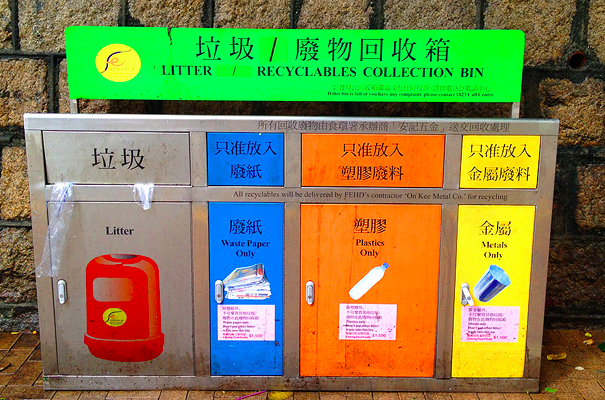
Hong Kong apparently recycles 35% of it’s waste, which sounds pretty decent but this is not an accurate statistic. According to the government, 44% of that 35% recycled waste is paper, but Hong Kong does not have any local recycling plants. Therefore this paper is sent to other countries and there lacks any stringent regulations to check whether it actually is being recycled. It could easily be dumped somewhere. Hong Kongers are also misusing the recycling bins. An investigation by Greener’s Action found that less than 40% of the content in recycling bins were actually recyclable items. Finding these bins is already difficult, there is only one recycling bin for every 14 rubbish bins in Hong Kong, but to know that people aren’t even using it properly is infuriating. This reveals a dire need for government involvement and public education.

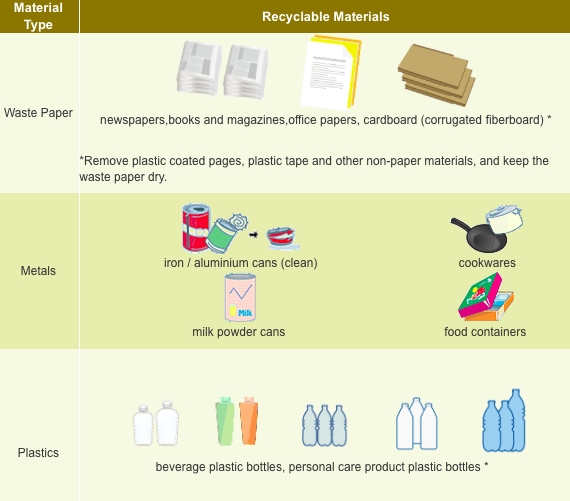
According to the website of the Hong Kong Government’s Environment Protection Department, these are the types of items that can be recycled (there are other categories also, see the full list here):

Screen Shot 2018-06-15 at 12.57.28 PM.png

The range is pretty limited, particularly in the plastics section. How could this be it?! There’s so much more that can be recycled. Jerry has been trying to speak to his building’s management to get some recycling bins in our building but no one would give him the time of day. We started searching around and found Hong Kong Recycles. It is a recycling service that comes by every month to pick up your items. The website does not give too much information (which is annoying and I think they could vastly improve on that), but according to the email correspondence Jerry had with them, they are able to recycle more types of plastic and they work with reliable recycling partners to ensure items are not tossed into the landfill. While I think there are some gaps of information and I would like to be more certain of the effectiveness of this service, this is the best that we have found for now. We pay $350 per month and they provide bags for us to put our items in (plastic, paper, glass, aluminum). Another thing that we liked about this service is that they work with Caritas to provide jobs for socially disadvantaged people.

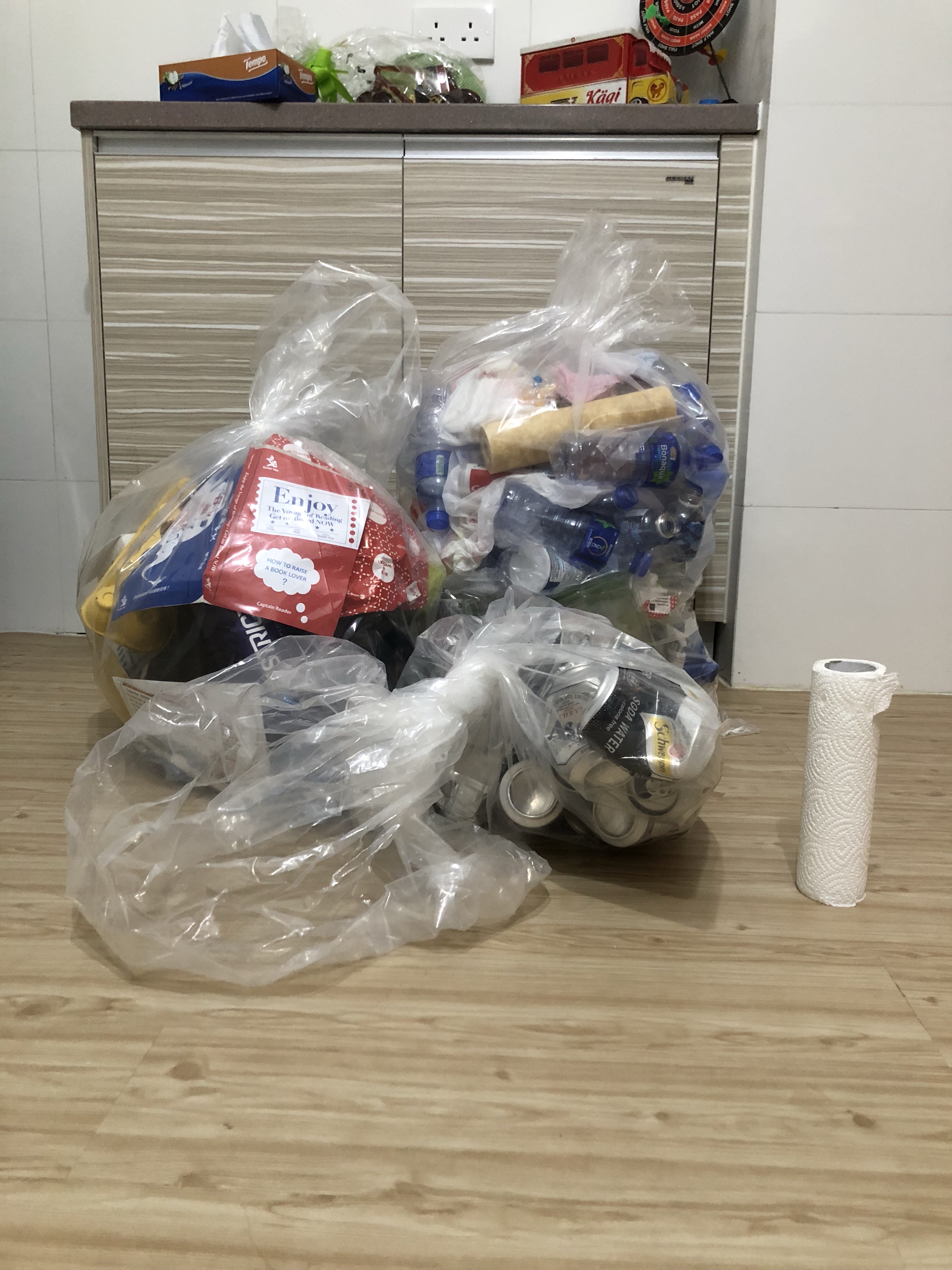
After one month of using this service… this was what we had (I put a roll of paper towel next to them for scale… we also use reusable towels now but this is leftover). Please note that I went on a boat trip and took back all the plastic bottles, so that took up a good chunk of our plastic bag since we usually never use plastic bottles. We also had some drink cans from the boat trip.

You might think that this isn’t a lot or be surprised by how much there is. I personally was the latter. Please also remember that these are only the things that are being recycled… there are still other items being thrown out that cannot be recycled! Jerry and I are also only two people and people who are trying really hard to be conscientious about single use plastics and waste. We always use sports plastic bottles, bring our own lunch box (even when we buy food from outside, we bring an empty one), and order take out maybe once a month, if ever. I hope that this makes you think about how much stuff you could accumulate in a month and how much of that will end up in a landfill. There are 7.4 million people in Hong Kong… if we all don’t give a shit and keep doing what we are doing we are going to have a HUGE problem. This article sums it up nicely…

Everything little thing can have a huge impact. We should never think that our individual actions won’t amount to much. Think about it this way, if you stopped buying your daily plastic bottle of water and invested in a reusable one, that’s saving 365 bottles a year! Imagine if all (that’s super optimistic) or a few thousand of people did that… that’s a LOT OF BOTTLES! You can make a difference! Also don’t forget about the power of advocacy. I don’t want to be overly pushy but I do love to tell my friends and colleagues about my eco initiatives and am super happy that my friends have been really supportive and made some lifestyle changes also. They are also super cooperative and help me collect bottles and cans at social events so I can bring it home to recycle. I also take back the plastic takeout box of my colleagues to bring home.

It is upsetting to see people not caring about the planet and to continue to be so irresponsible and wasteful. The trash doesn’t just disappear into thin air when we toss it out… it’s not something we can just say “it’s not my problem now”. We all have a responsibility in protecting our planet and to make it a better place for others and future generations. I am far from perfect and have so much more to improve on, but I am so excited that I have had this realization and to have a partner who shares these ideals with me. This planet is our beautiful home and we have done so much damage… it’s time to reflect on our lifestyle and make some changes.